Tuesday, March 13, 2012

"Made in the USA" Gear Review: Voile T-Wood Avalanche Shovel- Winter Survival Shovel for Bushcrafters?

Voile's T-Wood Avalanche shovel is not only a great safety tool for skiers, it's also an excellent winter wilderness survival tool for bushcrafters. Aside from the obvious benefit of carrying a snow shovel to dig snow shelters, the inclusion of a "Saws-all" blade brings it up to a whole new level. With this saw, you can easily process firewood, cut snow/ice blocks or wooden poles to build shelters.
It features a tempered aluminum shovel, retractable aluminum handle and easily breaks down to fit into most backpacks. The T-handle itself is made of plastic. The saw blade is made of stainless steel and roughly 7" long. When not in use it easily stows away inside the handle (replacement saws are available directly from Voile).

(click to enlarge)

Specifications:

Weight- 1 lb.10oz./0.74kg
Length- 23.75in/60.3cm
Extended Length- 29.75in/75.6cm
Made in Salt Lake City, Utah USA

The Aluminum used in the shovel is certainly heavier than comparable plastic avalanche shovels, but what it loses in weight advantage it makes up for with increased strength. During our testing, we used the Voile to shovel out several teepee sites in deep snow as well as building snow mounds for insulation around them. We also used it to pick up and move hot rocks around the campfire several times. The Voile didn't even have a chip in the paint after all this, very impressive. 

We also tested the saw extensively. While the saw teeth aren't as efficient as those on a Bahco Laplander Saw (shown in the photo collage above), the ability to use it two-handed on a longer shovel handle increases the efficiency enough to closely match the performance of the Bahco. This longer handle also has the added advantage of being able to reach higher limbs on trees if you need to reach dry wood for kindling or branches for shelter/bedding material. 

(click to enlarge)

All in all this is an excellent survival tool to keep handy whether you're a skier, bushcrafter or backpacker and its durable construction should give you years of service. Highly recommended. 

To buy this product directly from Voile USA please click here


About the author
Jason Schwartz is the founder and senior editor of Rocky Mountain Bushcraft. He is a former Red Cross certified Wilderness & Remote First Aid Instructor, and has taught bushcraft and wilderness survival techniques to the Boy Scouts of America, interned with the US Forest Service, and studied wilderness survival, forestry and wildland firefighting at Colorado Mountain College in Leadville, Colorado. Jason has also written for magazines such as The New Pioneer and Backpacker, including writing the "Tinder Finder" portion of Backpacker's "Complete Guide to Fire," which won a 2015 National Magazine Award (NMA). Email him at rockymountainbushcraft @ hotmail.com (without spaces)

Monday, March 12, 2012

"Made in the USA" Gear Review: Filson Wool Cuff Cap


Rocky Mountain Bushcraft was lucky enough to test several Filson products for our upcoming "Made in the USA" article, including this Wool Cuff Cap. As I'll be discussing in that article, Filson has an almost cult-like following amongst outdoorsmen, hunters and bushcrafters. Once you've worn a Filson you'll quickly find out why!

Filson products ooze with quality and design intelligence. This simple wool cap is no different. Filson says in their product description that this is the "best knit cap you've ever worn." After wearing it out in the field for a month, both Dave and I agree, it is one of the best caps we've ever worn. It's just a simple, 100% wool cap but it fits well and feels almost indestructible.

(Here's Dave, looking a little like Chuck Norris, wearing the Wool Cuff Cap under a US made Wintergreen Anorak. If I ever have trouble with rogue bushcrafters in the backcountry I just send Dave after 'em!) 


So even if you've never tried a Filson product, check out this excellent wool cap. It's as affordable as many similar foreign-made products yet is made in the USA and built to last a lifetime. Highly recommended.

Made in Seattle, Washington USA

For more information or to purchase this product directly from Filson, please visit:
www.filson.com/products/wool-cuff-cap.60198.html


About the author
Jason Schwartz is the founder and senior editor of Rocky Mountain Bushcraft. He is a former Red Cross certified Wilderness & Remote First Aid Instructor, and has taught bushcraft and wilderness survival techniques to the Boy Scouts of America, interned with the US Forest Service, and studied wilderness survival, forestry and wildland firefighting at Colorado Mountain College in Leadville, Colorado. Jason has also written for magazines such as The New Pioneer and Backpacker, including writing the "Tinder Finder" portion of Backpacker's "Complete Guide to Fire," which won a 2015 National Magazine Award (NMA). Email him at rockymountainbushcraft @ hotmail.com (without spaces)

"Made in the USA" Gear Review: MSR Lightning Ascent 30 Snowshoes w/ Modular Flotation Tails

MSR designed these snowshoes to deliver "unmatched traction and security on any terrain, in any conditions" according their product literature. They are also meant for maximum flotation when bearing loads up to 300lbs with the attached tails.

To see if they would live up to this description, we each loaded up with over 80 pounds of gear, including boots, backpack, winter clothing and other essentials and hit the four foot deep slopes off of Colorado's famed Longs Peak Trail.

During this test, we also wanted to try out key features like the PosiLock AT Bindings, 360 degree traction frame, pivot crampons and especially the Ergo Televators, which are supposed to increase traction and reduce fatigue when trekking uphill. The photos below illustrate some of these features:

(click to enlarge)

Lightning Ascent 30 Specifications :
Weight per pair- 4 lbs 8 oz / 2030 g
Weight- 8 in / 20 cm
Length- 30 in / 76 cm
Gait- Unisex/normal width
Footwear size range- 4.5 M - 15 M / 35.5 - 49.5
Load- 150 - 280 lbs / 68 - 127+ kilos
Load w/tails- 180 - 300+ lbs / 82 - 136+ kilos
 Made in Seattle, Washington USA

FIELD TESTING

As mentioned, we loaded up to full multi-day winter backpacking weight and picked an uphill slope with fresh, unbroken snow to test the shoes. Average snow depth was roughly four feet and powdery. We normally use two poles for better balance, but one of our Chinese-made ski poles broke right before testing! (Sorry, American made ski poles were one of the only things we couldn't find for the upcoming article). We figured it would pose an even greater challenge to these snowshoes, so we went ahead with testing anyway.

 (click to enlarge)


Flotation was generally good, though not on the level of wooden snow shoes of course (to be expected from modern technical shoes). However, the Lightning Ascents were much better at handling tight spaces and traction-challenged surfaces than I've experienced with wooden shoes, so it's a worthwhile trade.

The PosiLock AT straps functioned as advertised and were indeed easy to use when taking the shoes on and off. We also never experienced any loosening or slippage during the test. The pivot crampons made the shoes feel secure and comfortable on some of the slicker surfaces as well.

Our favorite feature though was definitely the Ergo Televators. Simply flip up the Televators with the handle of a ski pole (see the photo below) to set them in place and steep slopes suddenly become fun to traverse. Dave and I both raved about how much of a difference these things made! 

(click to enlarge)

Overall, we really enjoyed these snowshoes and they helped to inspire confidence on the steep slopes and tight spots we encountered during testing. Definitely a great choice if you plan to do any serious winter trekking or backpacking, plus, they're made in the good ol US of A!

For more information, please visit MSR's product page for the Lightning Ascent 30


About the author
Jason Schwartz is the founder and senior editor of Rocky Mountain Bushcraft. He is a former Red Cross certified Wilderness & Remote First Aid Instructor, and has taught bushcraft and wilderness survival techniques to the Boy Scouts of America, interned with the US Forest Service, and studied wilderness survival, forestry and wildland firefighting at Colorado Mountain College in Leadville, Colorado. Jason has also written for magazines such as The New Pioneer and Backpacker, including writing the "Tinder Finder" portion of Backpacker's "Complete Guide to Fire," which won a 2015 National Magazine Award (NMA). Email him at rockymountainbushcraft @ hotmail.com (without spaces)

Saturday, March 10, 2012

"Made in the USA" Gear Review: Fox River Outlander Thermal Boot Socks- Affordable US made quality

Fox River Mills has been making socks, mittens and gloves in the USA since 1900. Originally located in Appleton, Wisconsin, Fox's primary focus during their first 60 years was selling products to hunters, fishermen and lumberjacks.

Fox Expanded their line in the 1960s with newer styles and colors to maintain a competitive edge in the expanding outdoor sports market. They ultimately moved their plant to Osage, Iowa in 1971 and continue to manufacture quality US made products there today.

SPECIFICATIONS

Style- Over the Calf Boot Sock w/ Wick Dry Technology 
Material- 62% Acrylic/20% Stretch Nylon/17% Worsted Wool/1% Wool
Weight- 4.5 ounces per pair
Country of Origin- Made in Osage, Iowa USA


To test the Outlanders, I wore them inside a pair of insulated Goretex boots during several mountain bushcrafting trips. Even with temps dipping down to the single digits they were comfortable, breathable and warm each time. The merino wool blend was also soft and itch-free.


My favorite cold weather socks are normally Smartwool Mountaineering Socks, but I have to say the Outlanders gave them a run for the money.

Though lower in wool content, the Outlanders are also half the price, yet give similar performance. Long term durability is still in question of course, but I'll post an update to this review a year from now to see how the socks are holding up. So far so good.

So next time you're shopping for a great pair of socks for cold weather adventures, check out Fox River's Outlander socks. 


For more information or to purchase these directly from Fox River, please click here


About the author
Jason Schwartz is the founder and senior editor of Rocky Mountain Bushcraft. He is a former Red Cross certified Wilderness & Remote First Aid Instructor, and has taught bushcraft and wilderness survival techniques to the Boy Scouts of America, interned with the US Forest Service, and studied wilderness survival, forestry and wildland firefighting at Colorado Mountain College in Leadville, Colorado. Jason has also written for magazines such as The New Pioneer and Backpacker, including writing the "Tinder Finder" portion of Backpacker's "Complete Guide to Fire," which won a 2015 National Magazine Award (NMA). Email him at rockymountainbushcraft @ hotmail.com (without spaces)

Friday, March 9, 2012

"Made in the USA" Gear Review: Wintergreen Northern Wear Plunge Mitts


Mush!!! If there is one piece of gear we've tested that instills us with the romantic vision of a lonely dog sledder and his/her team of Huskies hurtling towards the Arctic Circle, then these Plunge Mitts are it. It's not by accident that a large percentage of Wintergreen's customers are dog sledders and arctic expedition teams, because as one would imagine, they are rather particular about the cold weather clothing they choose. 

Make no bones about it, these are some seriously warm mitts. We wanted to test these not only because they are a quality, US made product, but also because here in the Rocky Mountains we often have dangerous, arctic-like weather up to 8 months out of the year. Hands and feet are especially vulnerable, so we thought these mitts would be great to test while backpacking up Longs Peak Trail.

Specifications

Outer shell:
  • 3-ply nylon reinforced in the palm with Slip-Not grip pad
  • Gauntlet cuff- 1000-denier Cordura
Liners:
  • Two removable 8.5 oz. Polartec Wind Pro fleece liners (one fits in the other and attaches to the shell with Velcro)
  • Patch of Polartec Wind Pro on back of mitt for clearing outside of goggles, etc.
Detachable Chest Strap: Nylon Mesh Webbing

Weight: 16.8 ounces with chest strap, 15.6 ounces without chest strap

Country of origin: Made in Ely, Minnesota USA

Features/Design

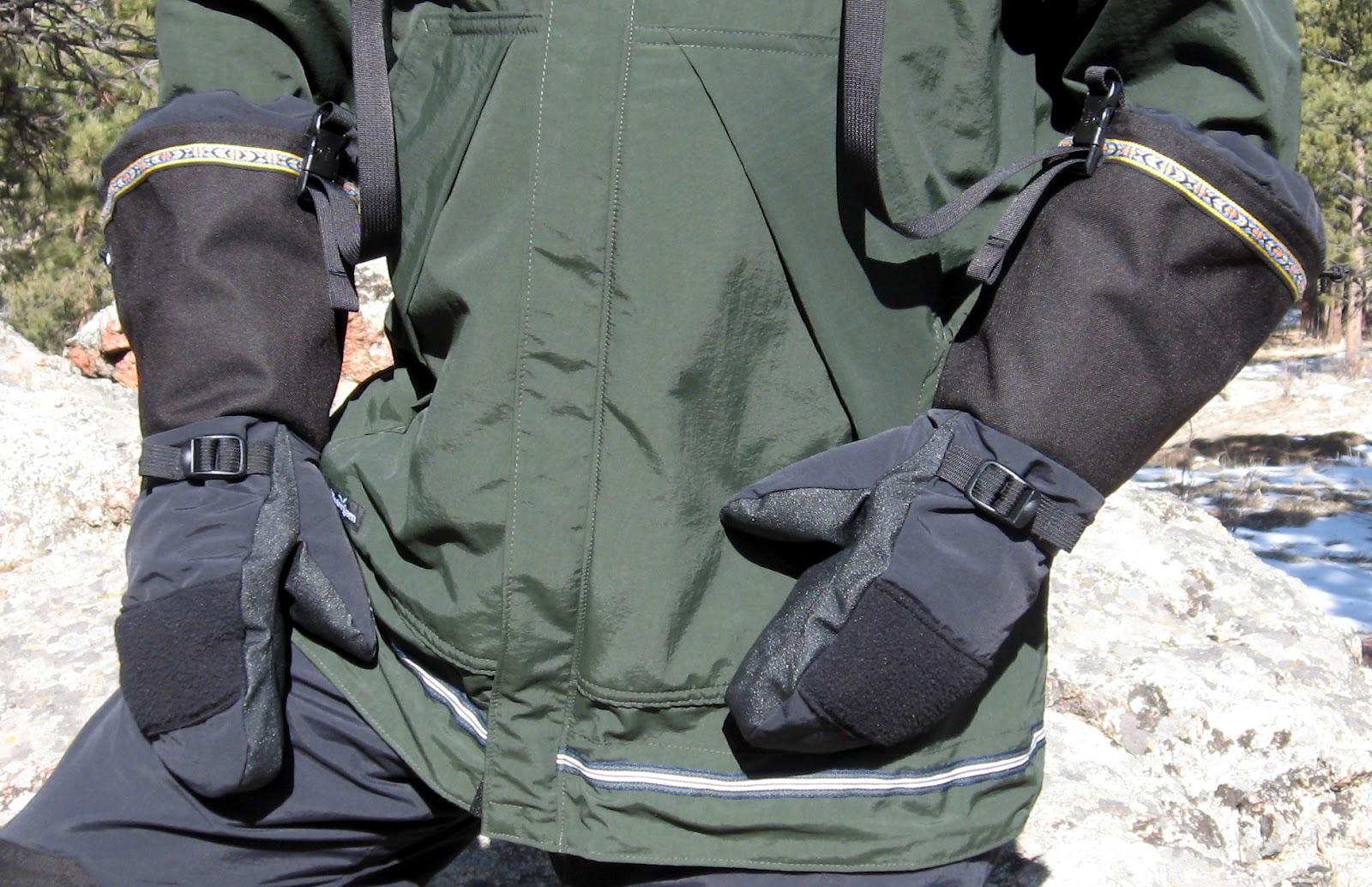
The Plunge Mitts get their name from their wide gauntlet design, allowing you to plunge your hands easily into them while wearing a heavy jacket. They work as intended, making it easy to put them on even with the bulkiest jacket sleeves:


The mitts consist of an outer shell, which is constructed of a water resistant 3-ply Supplex Nylon with (DWR), Courdura Nylon Gauntlet, and a grippy material called "Slip-Not" on the palm. The "Slip-Not" material works very well and made grabbing slippery objects like hiking poles, knife handles and snow shovel handles much more secure. It also seems to be very durable and should provide years of service.


The back of the mitt has a patch of Polartec WindPro Fleece sewn onto it for wiping off wet goggles or wet noses!


An elastic draw cord tightens the gauntlet down with just one hand:


Liners

The liners consist of two removable 8.5 oz. Polartec Wind Pro fleece liners that fit inside of each other and attach to the shell with Velcro.


Both liners joined into one:


Chest Strap

I have to be honest here. Dave and I initially thought chest straps for mitts were overkill, but after using them, we now consider them essential. No more worrying about dropping your mitts in a snow drift, or misplacing them and struggling to find them in the dark. Besides, they're just plain convenient.

Shown in the photo are the chest straps over Wintergreen's excellent Expedition Shell Anorak (also made in the USA):

The straps attach to plastic snap connectors on each mitt:


Field Test

To test the mitts, Dave and I took them up on Colorado's famed Long's Peak Trail for an overnight backpacking trip when the weather was hovering around 0 degrees F with wind chills down to -10 F. Normally it would be much colder than this in February, but it's been one strange year for weather to say the least. 

When we had the Plunge Mitts on, our hands never got cold, whether on the move or sitting in camp. As a matter of fact, they were almost laughably warm at those temperatures, which I consider to be excellent performance. 

Dave at the Longs Peak trailhead (click to enlarge)

Conclusion

If you're looking for some of the warmest cold weather mitts around, check out Wintergreen's Plunge Mitts. They are extremely well constructed and versatile with the two layer liner system. Throw in the very useful chest strap and you're ready for whatever mother nature can throw at you. Highly recommended.

For more information or to buy these directly from Wintergreen, please click HERE


About the author
Jason Schwartz is the founder and senior editor of Rocky Mountain Bushcraft. He is a former Red Cross certified Wilderness & Remote First Aid Instructor, and has taught bushcraft and wilderness survival techniques to the Boy Scouts of America, interned with the US Forest Service, and studied wilderness survival, forestry and wildland firefighting at Colorado Mountain College in Leadville, Colorado. Jason has also written for magazines such as The New Pioneer and Backpacker, including writing the "Tinder Finder" portion of Backpacker's "Complete Guide to Fire," which won a 2015 National Magazine Award (NMA). Email him at rockymountainbushcraft @ hotmail.com (without spaces)

Thursday, March 8, 2012

Gear Review: Sorel Men's Caribou -40 Degree Boots


Winter camping in the Rockies can be a recipe for cold and soggy feet if the right footwear isn't chosen. Even during the most frigid weather, snow can melt and refreeze daily in the mountains due to the intensity of the high altitude sun. This creates the perfect condition for wet boots and eventually, a cold and miserable camping experience.

Enter Sorel's -40 Degree Caribou Boots. Classically styled with a heritage dating back to 1972, Caribou boots have been the staple of many outdoor enthusiast's kits for over a generation now. According to Sorel, even Bear Grylls is known to sport a pair of Caribous on occasion during his winter outings. When Sorel offered to send us a pair to rigorously field test and review, we eagerly accepted.

Specifications
  • Seam-sealed waterproof construction with waterproof nubuck leather upper
  • Removable 9mm ThermoPlus felt InnerBoot
  • Sherpa Pile snow cuff
  • 2.5mm bonded felt frost plug
  • Handcrafted waterproof vulcanized rubber shell with Sorel AeroTrac non-loading outsole
  • Weight- 79.2 ounces per pair (as measured on a postal scale)

The Caribous feature a vulcanized rubber lower shell and a nubuck leather upper that are seam sealed for what Sorel advertises as "complete waterproofness." (We'll find out later in this review if these boots really fit this description with our infamous lake submersion test!):


Sorel calls the style of soles on these boots "AeroTracs" and they are supposed to increase grip during icy, snow-laden conditions. The soles did provide adequate grip on ice, though not quite as good as a pair of North Face Baltoro 400 -40 boots I once owned, for instance:


One really nice feature of the Sorels is the removable Felt Innerboot. These can be removed and kept inside your sleeping bag so that your feet won't freeze when putting on cold boots in the morning. They're also great for keeping your feet cozy when lounging around inside your tent or teepee:


The lacing system is a set of simple metal loops, which according to Sorel are rustproof. It would be nice to have some sort of locking hardware half way up to make it easier to tighten the laces up, but they work decently enough overall:


Field Testing

At almost 5 pounds per pair, the Caribous are certainly not the first choice for backpacking where trimming weight is essential, though I'm sure some ironmen/ironwomen might try it!

With that in mind, we decided to test the Caribou's in a way that we think most people would actually use them -- winter camping. Since our winter gear testing environment is similar to winter camping in that it involves lots of standing around outside in snowy, sometimes harsh conditions, we felt this would be a close match for testing the boots out with our intended focus.

To put the boots through their paces, Dave and I took turns wearing the Caribous for 3 weeks during our winter testing trials. Temps ranged from a frosty -10 F to a more temperate +40 degrees F. During our field testing, neither of us ever had cold feet. Though generally a very comfortable boot, it does lack arch support, and I found that adding a pair of Dr. Scholl's made them much more comfortable for walking longer distances.

Water Submersion Test

We also performed a rigorous submersion test to check for leakage. To see if the Caribous were actually waterproof, we headed off to a local mountain lake which has crystal clear water and a gently sloping, shallow bottom close to the shoreline for easy testing access:


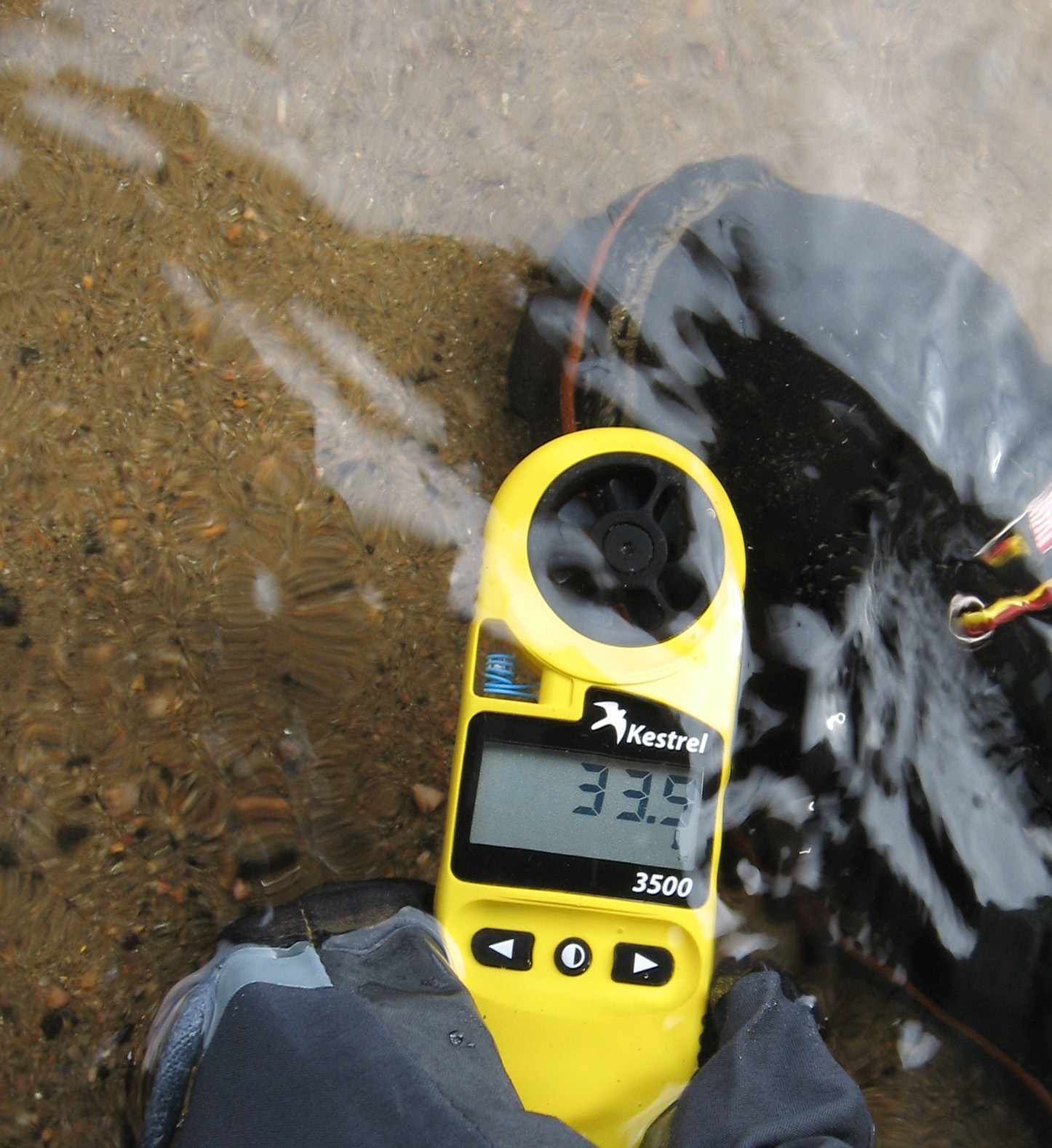
We submerged the boots up to our ankles for 20 minutes in 34 degree F water as measured with our Kestrel 3500 Weather Meter.


No leakage was detected and our feet were generally warm the whole time. Dave, who has naturally "cold" feet felt a bit of coolness inside his boot toward the end of the test but not enough to cause major discomfort. We both felt the overall performance of the Caribous was excellent considering how extreme the test conditions were.

Conclusion

Next time you're in the market for a pair of winter camping boots, definitely consider Sorel Caribous. The time tested design, slipper-like comfort and handy removable liners make them excellent cold weather camping companions.

For more information please visit Sorel's Caribou product page


About the author
Jason Schwartz is the founder and senior editor of Rocky Mountain Bushcraft. He is a former Red Cross certified Wilderness & Remote First Aid Instructor, and has taught bushcraft and wilderness survival techniques to the Boy Scouts of America, interned with the US Forest Service, and studied wilderness survival, forestry and wildland firefighting at Colorado Mountain College in Leadville, Colorado. Jason has also written for magazines such as The New Pioneer and Backpacker, including writing the "Tinder Finder" portion of Backpacker's "Complete Guide to Fire," which won a 2015 National Magazine Award (NMA). Email him at rockymountainbushcraft @ hotmail.com (without spaces)

Monday, March 5, 2012

Gear Review: Outdoor Research Mt Baker Modular Mitts


In this review we'll be testing Outdoor Research's Mt Baker Modular Mitts, so named for the 10,781 ft volcanic mountain found in the Northern Cascades of Washington. According to Wikipedia "Mount Baker is one of the snowiest places in the world; in 1999, Mount Baker Ski Area, located 14 km (8.4 mi) to the northeast, set the world record for recorded snowfall in a single season—1,140 inches (95 feet or about 30 meters)."

Appropriate to their namesake, Outdoor Research bills the Mt Baker Modular Mitts as “Serious high-altitude storm protection.” In this review, we are going to find out if these mitts actually live up to the hype in Outdoor Research's bold claim.


SPECIFICATIONS

Material: Shell - 3-layer 70D Taslan ripstop Gore-tex shell
Fully seam taped
Palm: AlpenGrip palm
Pre-curve, boxed construction
New thumb crotch construction for enhanced articulation
Carabiner loop on back of hand
Ladder-lock wrist cinch with easy-grip tab
SuperCinch gauntlet closure
Removable Idiot Cord
Removable Liner: PrimaLoft One, 170 g on back of hand and thumb; Moonlite Pile fleece palm
Toughtek tabs on fingertips and thumb keep liner from slipping or bunching
Lightweight ripstop shell
Heat packet pocket on back of hand
Hook, loop anchor points at top and bottom of wrist
Hook, loop tab adjustment on gauntlet
Weight: 9.6 oz (as weighed on a postal scale)
Country of Origin- Designed in the US, Manufactured in Vietnam
Comfort Range- -15 Degrees F to +15 Degrees F

The Mitts

The shell is made from 3-Layer 70D Taslan ripstop Gore-tex and advertised as being waterproof. A nice touch is the caribiner loop on the top of the mitts:


Outdoor Research uses a material called AlpenGrip on the palm. I especially like this feature because it is durable and exceptionally grippy:


This grippy material comes in handy when performing tasks like grasping wet ski poles or using a camp knife:


The mitts can be hooked together with the attached male/female snap fasteners. I felt these fasteners were too small and would like to see them made larger for ease of use:


Cinching\uncinching the gauntlet is definitely one of this mitt's strong points. The photo illustration below shows the sequence of pulling the grey plastic pull tab which tightens the gauntlet. It is then released by pulling the cloth tab with the "OR" logo on it. This is a great feature that can be easily done without taking off the outer shell:

(click to enlarge)

Mitt Liners

The mitts have removable liners that consist of a ripstop nylon shell filled with Primaloft One (synthetic goose down) insulation. These were very warm and comfortable during testing. In weather as cold as 10-15 degrees F, these liners were usually all that were needed to keep my hands warm.


The fingertips are reinforced with a synthetic material called Toughtek to make them more grippy and to better protect the thin ripstop material:


The liner locks into the outer shell via velcro strips around the wrist area of both the liners and shell. The outer shell also has an "Idiot Cord" (AKA a lanyard):


This is helpful so your mitts stay safely attached to your body when needing to go hands free temporarily:


FIELD TEST 

To see if these mitts would live up to the claim of “Serious high-altitude storm protection”, I conducted two different tests. The first was to take the mitts into the mountains with me on an overnight bushcraft trip where the temps approached -10 degrees F (with the windchill factor). The other consisted of seeing if these mitts were actually waterproof as advertised (see test below).

In the mountain test, Dave (my humble and entertaining review assistant) and I swapped them back and forth to see if they would keep us warm in the extreme conditions.


Neither of us felt any discomfort, so the advertised comfort range of -15F to +15F appears to be fairly accurate.

Submersion Test

To see if these were waterproof, I submerged the mitts for 10 minutes in a local icy mountain lake to see if they'd leak and also keep my hands warm while doing so. Before submerging the mitts, we took detailed weather readings with a Kestrel 3500 weather meter. The standstill temps were hovering around 16-17 degrees F and the winchills were as low as 5 degrees F as shown here:


Here's one very brave reviewer (yours truly!) standing in 33 degree water to see if the mitts would leak or cause my hands discomfort from the cold. I had on US made Wolverine Northman Goretex\Thinsulate boots to protect my feet while testing:


Moving out into deeper water and then standing in that position for ten minutes!


The submerged Kestrel instrument showing the actual water temperature during testing:

Coming out of the water after 10 minutes and back on shore, the standstill temp was 18 degrees F. No leakage or discomfort was noted during this test. Note the ice that formed quickly on the glove as well:


Conclusion

At the beginning of this review I had my doubts that these mitts would live up to the hype in Outdoor Research's claims. All too often, gear manufacturers advertise qualities that don't stand up to testing in the field. To my pleasant surprise, these mitts actually do live up to their description. They are waterproof, warm, and comfortable and their easy to use features make them a great pair of cold weather wilderness mitts.

5 of 5 Stars (Highly recommended)


About the author
Jason Schwartz is the founder and senior editor of Rocky Mountain Bushcraft. He is a former Red Cross certified Wilderness & Remote First Aid Instructor, and has taught bushcraft and wilderness survival techniques to the Boy Scouts of America, interned with the US Forest Service, and studied wilderness survival, forestry and wildland firefighting at Colorado Mountain College in Leadville, Colorado. Jason has also written for magazines such as The New Pioneer and Backpacker, including writing the "Tinder Finder" portion of Backpacker's "Complete Guide to Fire," which won a 2015 National Magazine Award (NMA). Email him at rockymountainbushcraft @ hotmail.com (without spaces)