Wednesday, December 16, 2015

Mountain Bushcraft: Need to Make Charcloth? Mother Nature Provides Everything You Need!

(photo credit: Jason Schwartz/Rocky Mountain Bushcraft)

Many bushcrafters assume that the only way to make charcloth (also known as "char-tinder") is to carry materials such as linen, cotton or jute -- not true! There are in fact a wide variety of natural materials that can be used to make effective char-tinder.

In my experience, dry-rotted wood (also known as "punkwood"), the dead inner bark of juniper, willow, aspen, cottonwood, poplar, cedar, oak, pine, big sage, maple and basswood trees, thistle or cattail down, pith from mullein stalks, old bees or wasp's nests, or pieces of amadou from a horsehoof fungus (typically found on Birch trees) all make good char-tinder.

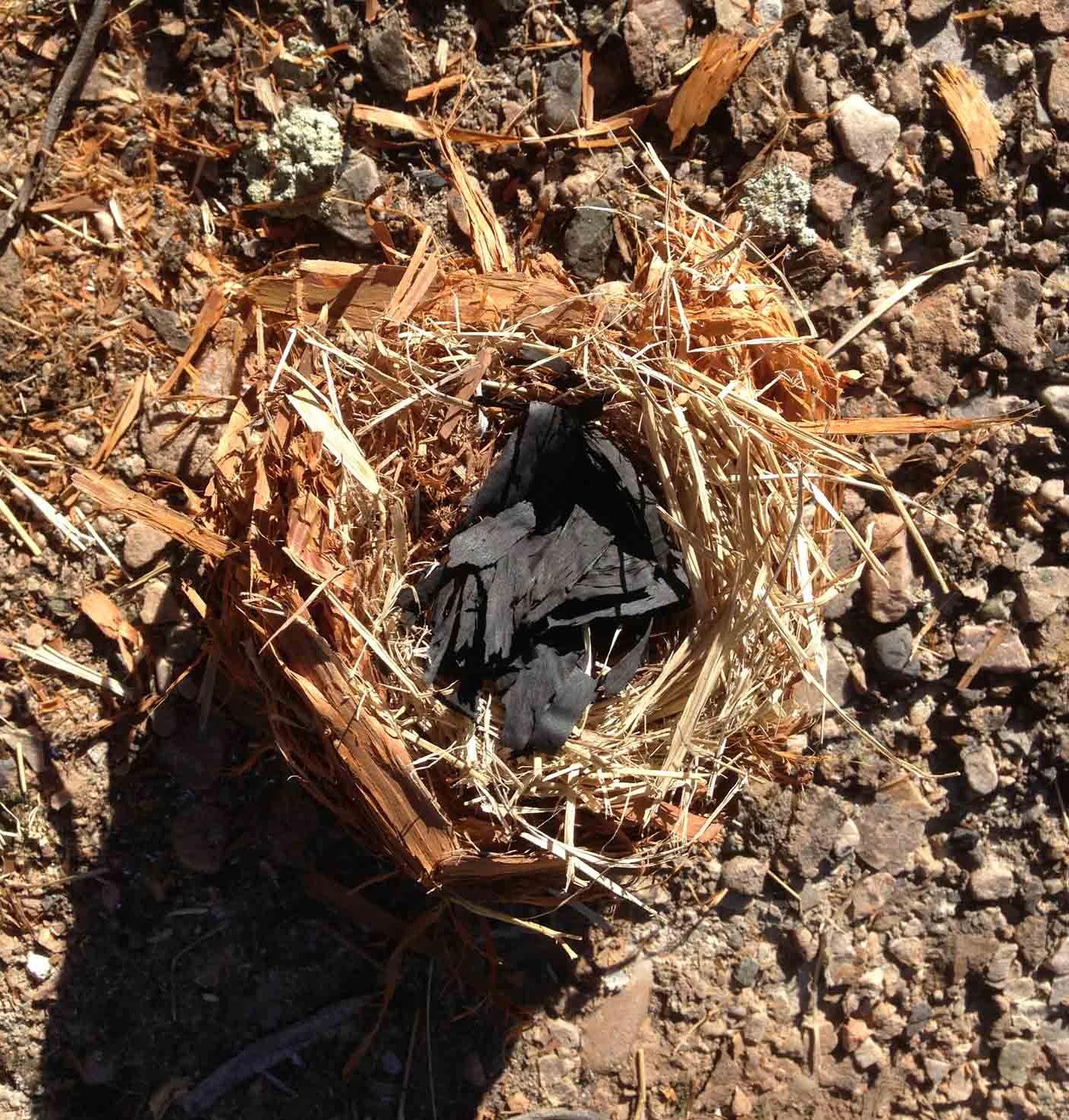
BELOW: The inner bark from a Juniper Tree was charred to make an excellent tinder that easily ignited with the spark from a carbon Mora knife and a piece of Chert:


(all photos: © 2015 Jason Schwartz/Rocky Mountain Bushcraft)

More Juniper Char-Tinder:


Juniper char-tinder nested in a tinder bundle of Juniper bark and dry grasses, ready to take a spark:

Dead inner bark of Aspen, great for char-tinder or for tinder bundles:

Dead inner bark of Mountain Willow:

Punkwood is one of the best materials, and can be harvested nearly anywhere in the world from nearly any type of tree. You will know punkwood by the way it feels-- super light and spongy, similar to styrofoam.

Below: A good candidate to find punkwood -- an old rotten log laying on the ground near a mountain stream:


Punkwood found in the dead branch of a Rocky Mountain Gambel Oak. This punkwood made excellent char-tinder:


To turn these natural materials into char-tinder, place the materials inside a closed, vented metal container or old glass bottle (uncapped) and burn them over a fire until they stop smoking. You can also turn them into char-tinder by igniting them and snuffing them out in between a couple of pieces of dead tree bark, burying them under hot coals/ashes until they char, or snuffing them out them inside an Altoids-style container. Due to the delicate nature of these type of charred materials, it is best to use the drop-spark method with your flint & steel to ignite them.

Cheers, 

Jason


About the author
Jason Schwartz is the founder and senior editor of Rocky Mountain Bushcraft. He is a former Red Cross certified Wilderness & Remote First Aid Instructor, and has taught bushcraft and wilderness survival techniques to the Boy Scouts of America, interned with the US Forest Service, and studied wilderness survival, forestry and wildland firefighting at Colorado Mountain College in Leadville, Colorado. Jason has also written for magazines such as The New Pioneer and Backpacker, including writing the "Tinder Finder" portion of Backpacker's "Complete Guide to Fire," which won a 2015 National Magazine Award (NMA). Email him at rockymountainbushcraft @ hotmail.com (without spaces)

Monday, December 14, 2015

Axe Preparation Tip: Round Off The Top Edge of Your Haft to Prevent Splintering


Photo credit: Jason Schwartz/Rocky Mountain Bushcraft ©2015

When prepping a new axe for use out in the bush, one area that's often overlooked is the top of the haft that sticks out of the eye of the axe head.

The sharp edge of the wood, as it comes from the factory, is prone to splintering, and can lead to a damaged axe handle if not addressed before taking the axe out in the field. To fix this issue, simply sand the sharp edges with a fine piece of sandpaper, or a Dremel tool with a sanding drum, to make it smooth.


The result will be a more durable, splinter resistant axe handle. After you're done, make sure to apply two coats of linseed oil.

Cheers,

Jason

About the author
Jason Schwartz is the founder and senior editor of Rocky Mountain Bushcraft. He is a former Red Cross certified Wilderness & Remote First Aid Instructor, and has taught bushcraft and wilderness survival techniques to the Boy Scouts of America, interned with the US Forest Service, and studied wilderness survival, forestry and wildland firefighting at Colorado Mountain College in Leadville, Colorado. Jason has also written for magazines such as The New Pioneer and Backpacker, including writing the "Tinder Finder" portion of Backpacker's "Complete Guide to Fire," which won a 2015 National Magazine Award (NMA). Email him at rockymountainbushcraft @ hotmail.com (without spaces)

Friday, December 11, 2015

"Fat Guys in the Woods" Canceled


For fans of the Weather Channel's reality-based survival show "Fat Guys in the Woods," sad news. The Weather Channel has decided to cancel the show.

In a bid to stem a massive fall in profits this year ($335 million dollars according to the Washington Post), the Weather Channel decided to dump any non-weather related reality shows and return to a purely weather-related format.

This is unfortunate, because as I've said before, I think "Fat Guys" was one of the better survival shows that didn't go overboard with producer-induced drama and fake scenarios.

Regards,

Jason


About the author
Jason Schwartz is the founder and senior editor of Rocky Mountain Bushcraft. He is a former Red Cross certified Wilderness & Remote First Aid Instructor, and has taught bushcraft and wilderness survival techniques to the Boy Scouts of America, interned with the US Forest Service, and studied wilderness survival, forestry and wildland firefighting at Colorado Mountain College in Leadville, Colorado. Jason has also written for magazines such as The New Pioneer and Backpacker, including writing the "Tinder Finder" portion of Backpacker's "Complete Guide to Fire," which won a 2015 National Magazine Award (NMA). Email him at rockymountainbushcraft @ hotmail.com (without spaces)

Saturday, December 5, 2015

Please "Like" the Rocky Mountain Bushcraft Facebook Page!

Hey friends,

Hope you all are well! Just an FYI that I have finally finished the major project I have been working on over the past 8 months, and there will be major updates coming soon, as well as bunch of new material (finally!).

Just a reminder-- if you enjoy the content here, please show us your support by stopping by and hitting the "Like" button on the Rocky Mountain Bushcraft Facebook page --we would really appreciate it- thanks!


Jason and Leah

Friday, November 6, 2015

New books added to our Recommended Book List from Cody Lundin, David Wescott, Earth Knack, etc


Just uploaded a bunch of books from Cody Lundin, David Wescott, Earth Knack, Lone Pine Publishing, and others to our recommended books list. These are all books that I've read or used in the field and highly recommend them. Cheers, Jason

RMB in Winter 2016 issue of The New Pioneer Magazine


Hey friends, if anyone is passing by a newsstand over the next couple weeks, the New Pioneer has written a gracious editorial about RMB in their Woodsman's Almanac.